Red Fox Field & Bushcraft Ltd


Edibles and non edibles
Our woodland is home to a wonderful variety of plants, berries, and fungi — each playing an important part in the forest’s ecosystem. While some wild foods are edible, many are not, and a few can be harmful. For everyone’s safety, we ask visitors not to pick or eat anything unless it’s part of an organised, guided activity.
We encourage you instead to explore with your senses — notice the colours, shapes, and textures of the woodland around you. By leaving plants and fungi undisturbed, we help them continue to grow, support wildlife, and keep the woodland thriving for everyone to enjoy.
Blackberries
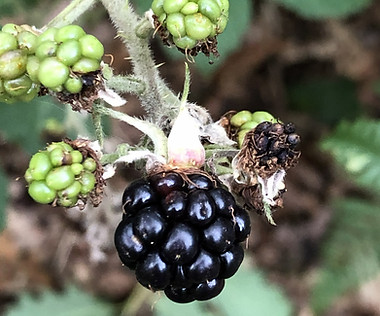
Blackberries are edible, they have long, thorny stems and produce dark purple-black fruits made up of many small juicy drupelets.
Blackberries don’t all ripen at once — each bramble can hold flowers, unripe green berries, red berries, and ripe black ones all at the same time. This means they provide food for wildlife over several weeks — bees love the blossoms early in summer, and birds and mammals feast on the berries later on.
Blackthorn - Sloe's

Blackthorn is a spiky, hardy shrub commonly found in UK hedgerows and woodland edges. It has small white spring flowers, and dark blue-black berries in autumn — it’s an important plant for hedgerow biodiversity, providing food and shelter.
Sloes are extremely tart and bitter if eaten fresh, so they’re usually used in cooking or to make sloe gin, jams, or preserves after being softened (traditionally by freezing or gently squashing).
The berries typically appear in late September or October, often after the first frost, which helps soften their tartness. Birds like thrushes and blackbirds feed on sloes in winter, helping to spread the seeds.
Fox Glove
.jpg)
Loved by pollinators: Foxgloves are a favourite of bumblebees, who climb deep inside each bell to collect nectar and pollen.
Highly poisonous: Every part of the plant — leaves, flowers, and seeds — contains digitalis, a powerful heart-affecting chemical. It’s used (in very small, controlled doses) in heart medicine, but can be deadly if eaten.
Mushrooms and Fungi
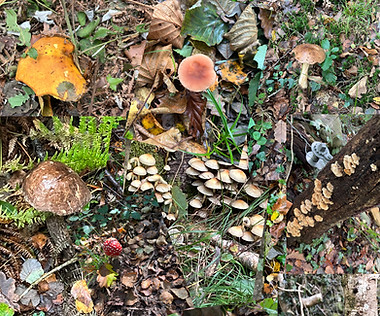
Our woodland is home to a fascinating variety of mushrooms and fungi, each with its own unique shape, colour, and role in the forest ecosystem. We’re still discovering and learning their names, so to stay safe, we follow a simple rule — we admire them, but don’t eat them.
Rowan - Mountain Ash berries

The rowan tree, also known as the mountain ash, is a graceful native tree found across the UK
In late spring it bears clusters of creamy-white flowers, followed by bright orange-red berries in late summer and autumn.
Interesting facts:
Wildlife feast: Rowan berries are a vital food source for birds, especially thrushes, blackbirds, and waxwings, who help spread the seeds far and wide. The spring flowers attract bees and insects, making rowan a wonderful all-season tree for woodland biodiversity.
The berries should not be eaten raw as they taste bitter and can upset the stomach, but when cooked they can be made into rowan jelly — often paired with game or meats.
Fly Agaric - Amanita muscaria

Fly agaric is instantly recognisable — the classic fairy-tale mushroom with a bright red cap covered in white spots. It usually grows under birch, pine, or spruce trees, often in late summer and autumn. The cap can range from vivid scarlet when young to a deeper orange-red as it ages, with a white stem and a skirt-like ring beneath the cap.
While strikingly beautiful, fly agaric is poisonous if eaten raw and can cause nausea, dizziness, hallucinations, and confusion.
Despite its toxicity, it plays an important ecological role — forming symbiotic (mycorrhizal) relationships with trees, helping them absorb nutrients from the soil.